
Who wants to protect these rabbits?
- junkoroberson
- Oct 30, 2025
- 4 min read


10/30/25
The rabbits of Okunoshima Island are designated by the Ministry of the Environment as "Priority Invasive Alien Species for Control" on its list of invasive species that pose a risk to ecosystems.
Given that domestic rabbits were abandoned on the island decades ago, it is perhaps not surprising that they are treated as "invasive alien species."
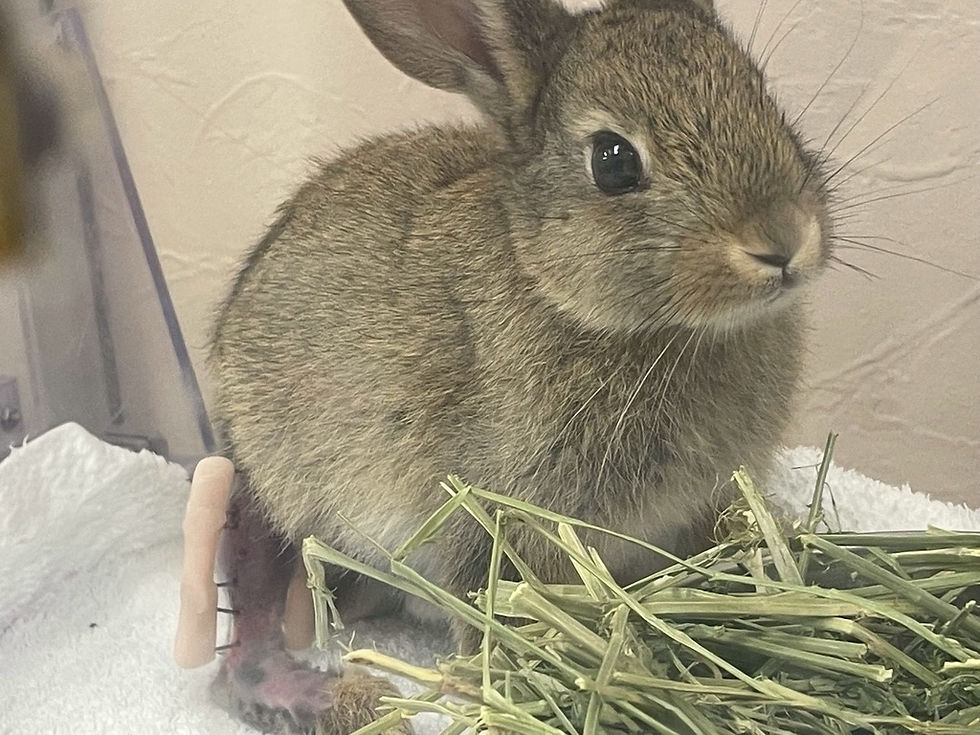
Even when rabbits on the island are sick or injured, no measures are taken to help them. The rationale appears to be that since no one holds legal ownership of the island's rabbits, providing no care for them does not constitute a violation of the Animal Welfare Act.
One even gets the impression that this situation has been cleverly defined in this way specifically to ensure that no one can be held accountable.
Furthermore—with the official endorsement of the Ministry of the Environment—a group known as the "Okunoshima Island Future Creation Executive Committee" has established rules requesting that visitors refrain from taking any rabbits off the island.
While the underlying intent is likely to prevent potential diseases carried by the island's rabbits from spreading to the outside world, isn't it far more probable that—even if such diseases did exist—they would have already been spread by tourists?
Moreover, rabbits that are rescued are taken directly to a veterinary hospital, so there is absolutely no need for concern regarding them.
The rule against touching the rabbits also appears to be justified on the grounds that they might be carrying diseases;
however, isn't the true underlying reason actually to prevent people from getting injured by being bitten by the rabbits?
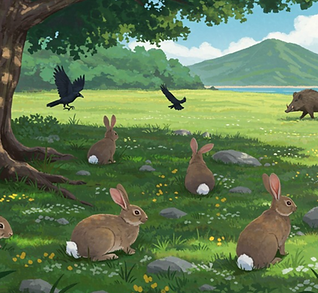
In the past, anti-crow deterrents were hung from trees near the burrows to protect the rabbits from attacks by crows. Undoubtedly, these were all removed shortly thereafter.
When we requested that signs be posted asking people not to climb on the burrows in order to protect the baby rabbits inside, the Ministry of the Environment explained that they would not permit signs created "for the sake of the rabbits"; however, they noted that signs requesting people not to climb could potentially be approved—depending on the specific circumstances—if the justification was framed around the risk of injury to humans.
Similarly, the concern raised regarding leftover food scraps likely stems less from the fear that an increase in natural predators might lead to attacks on the rabbits, and more from the view that such scraps detract from the island's scenic beauty and create undesirable sanitary conditions.
In short, while the wording on the island’s signage has seen some minor improvements in recent years, I am compelled to say that, fundamentally, the rules are by no means designed for the benefit of the rabbits; rather, they exist to protect visitors and the island’s natural environment.
Despite this, the Ministry of the Environment—which oversees Okunoshima as a National Park where such activities would typically be prohibited—has granted the city of Takehara permission to allow both the feeding of rabbits and the installation of water troughs.
Do people truly understand what it means to provide food and water? It means accepting responsibility for those lives.
In my view, the Ministry of the Environment’s touted approach of "leaving nature to take its course" is nothing more than "neglect."
As long as the city of Takehara continues to generate tourism revenue on the backs of these rabbits, I consider the abandonment of sick or injured animals to be a clear-cut case of animal cruelty.
We witness irresponsible and improper feeding by tourists, along with countless instances of children injuring the rabbits—actions that have led to the deaths of untold numbers of these animals.
Even the dedicated volunteers who dote on the rabbits have, over time, grown desensitized to their illnesses and injuries, resigning themselves to the reality of their short lifespans.
Shockingly, they now go so far as to criticize and slander those who attempt to rescue sick rabbits, accusing them of violating the rules.
Am I the only one who struggles to comprehend this glaring contradiction—that the very people who provide food and water out of a desire for the rabbits to remain healthy would then turn against those trying to save them?
If one has no intention of caring for these animals through to the very end, then I believe that providing them with food or water ultimately does nothing to truly benefit the rabbits.
Will anything on Okunoshima truly change in the near future?
How does the city of Takehara—which relies absolutely on the tourism revenue generated by these rabbits—intend to address this situation? If "sustainable tourism" is truly a viable concept here, I urge them to present a concrete plan immediately.
Due to a lack of adequate countermeasures, the wild boar population has surged, and the predation of rabbits by these boars is now a frequent occurrence. This grim reality is clearly reflected in the drastic increase in the number of rabbit carcasses being discovered.
If things continue on this path, there is a growing likelihood that the landscape of this island—once celebrated as "Rabbit Island"—will be transformed into something entirely different.
Who, then, will step forward to protect the lives of these rabbits? Time and again, the ones who end up as victims are none other than the rabbits of the island.
The tragedy of Okunoshima continues...
We ask for your cooperation in lodging a protest against this situation.
Please file a complaint with the Ministry of the Environment.Ministry of the Environment, Chugoku-Shikoku Regional Environmental Office — National Parks DivisionEmail: REO-CHUSHIKOKU@env.go.jp


Comments