

Who has right to end its life?
- junkoroberson
- Sep 27, 2024
- 3 min read


9/27/24
My older brother was a doctor. While on duty, he contracted COVID-19 through an in-hospital infection, developed pulmonary fibrosis, and passed away after a year-long battle with the illness. This disease is incurable, and the prognosis for survival is extremely short.
Even with the aid of machines to boost his oxygen levels, he told me—while he was still able to speak—that he constantly felt as if he were drowning; the agony was so intense that he could think of nothing else but the struggle to breathe.
He had faced the deaths of hundreds, perhaps thousands, of patients throughout his career and surely believed he understood their suffering well enough; yet, it seems that the anguish he experienced when he found himself in their shoes was an unbearable torment he truly grasped for the very first time.
He wished to be euthanized, but his request was denied; he eventually became bedridden and incontinent, and—feeling stripped of his human dignity—he continued to suffer until the very end, when he finally passed away.
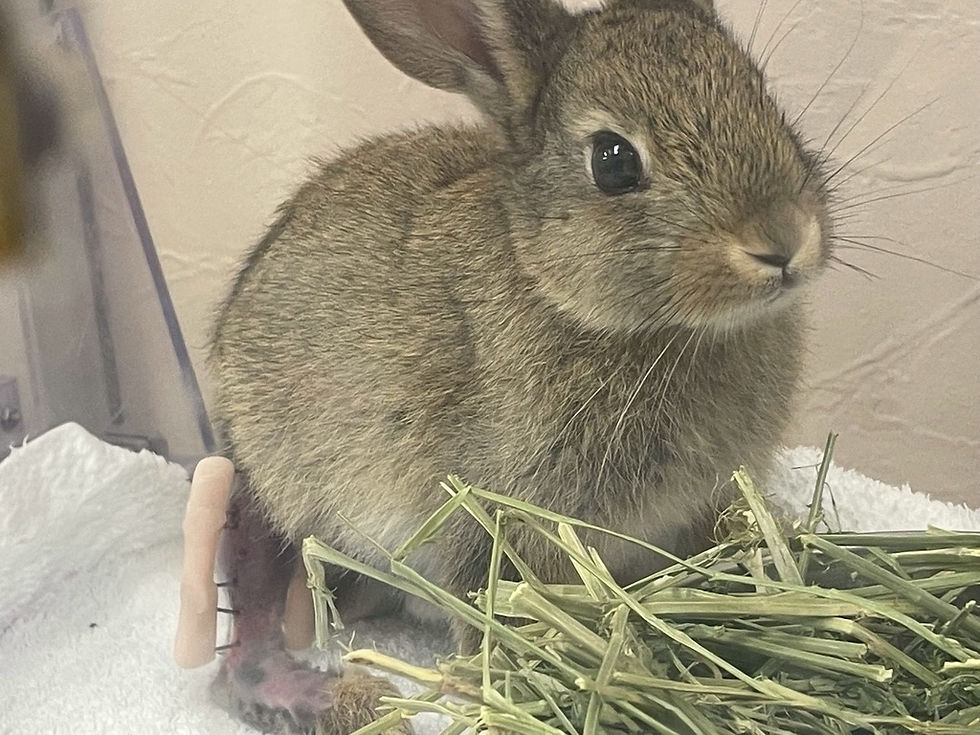
In early June, I discovered a rabbit in front of the visitor center, writhing in convulsions. Its condition deteriorated rapidly before my eyes; it could neither eat nor drink, and it appeared to be on the verge of death—it seemed it would not last much longer. I placed it in a box and set it aside next to the visitor center, shielded from public view.
However, the next day—more than 27 hours after I had first found it—it was still alive. It was clearly suffering, and feeling that I could not simply leave it there, my husband and I boarded a Shinkansen bullet train to take it to an animal hospital that was open on a Sunday.
During the train ride, its condition worsened further; maggots began to emerge from its face, and I had to use my fingers to pick them off to prevent them from getting into its eyes.
I got the distinct impression that the veterinarian treated us somewhat coldly, perhaps because the patient in question was a rabbit from Okunoshima Island.
The animal was already in a critical, near-death state; the hospital refused to admit it for inpatient care, and it received only very basic, minimal treatment. Yet, the rabbit clung to life.
I asked the vet, "If there is no hope for recovery, could you please perform euthanasia?" The vet replied, "The fact that you brought it all the way here suggests that you want to do everything possible to save it. If you simply wanted to have it euthanized, wouldn't it have been better to just leave it back on the island?"
At that moment, a horrific image flashed through my mind: the rabbit—still alive, despite being on the brink of death—being devoured by crows or wild boars. I felt, with absolute certainty, that that would have been the far more cruel fate. I felt it was inhumane.
In the end, the rabbit died several hours later, having suffered throughout.
For some reason, I found myself overcome by a sensation that the rabbit’s plight was eerily mirroring that of my brother. It was at that moment that I realized just how vast the difference is between the situation in the United States—where relieving an animal of its suffering when recovery is hopeless is recognized as a humane act—and the situation in Japan.


Comments