
Should save life or let him stay with family and die?
- junkoroberson
- Sep 17, 2025
- 4 min read

9/17/25
Criticism—specifically the accusation that we are "tearing families apart"—is sometimes leveled against our efforts to rescue injured and ailing rabbits on Okunoshima Island.
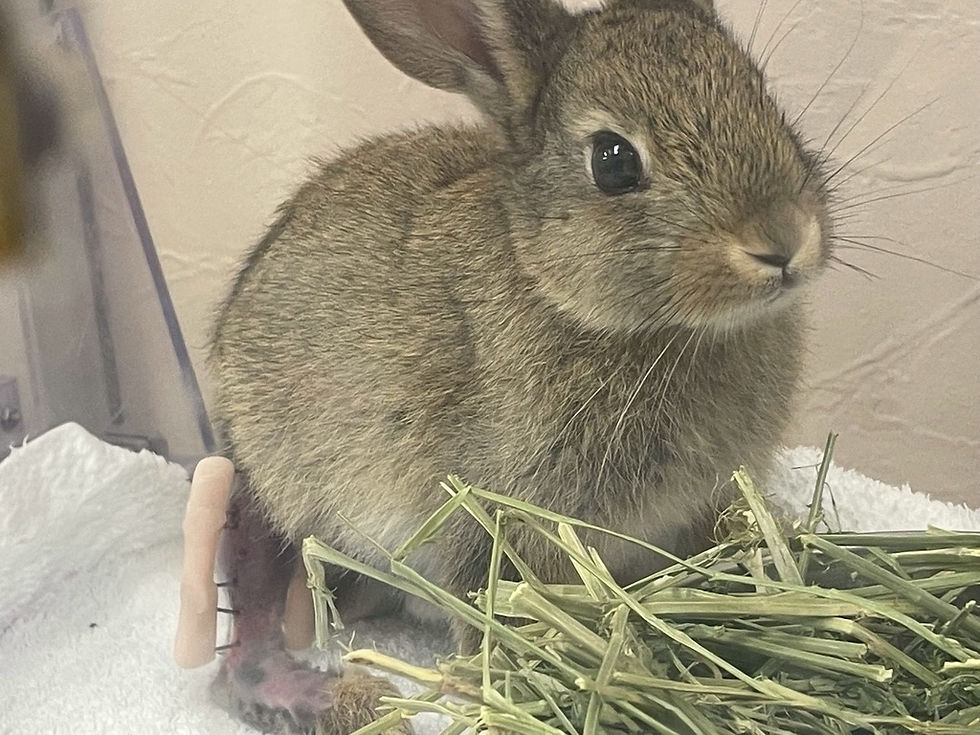
However, once a rabbit sustains an injury, it becomes so profoundly timid—to the point where one might think its very personality has changed—that it flees at the mere approach of other rabbits.
The surrounding rabbits, too, show absolutely no mercy toward an injured, vulnerable individual. While there are rare instances of injured females managing to avoid attack within the safety of the group, the ultimate fate of an injured rabbit is typically wretched—a cruelty so harrowing that it is almost unbearable to witness.
Rabbits are by no means strictly faithful to a single partner. They frequently take multiple partners, and should a partner pass away, they appear to face no difficulty whatsoever in finding a new one.As is common among many herd-dwelling animals, seeking out a new partner is likely just a natural, routine part of life in the wild.
Those individuals who have been visiting the island for years—often referred to as Usakatsu (rabbit enthusiasts)—seem to harbor a unique emotional attachment to the rabbits. I believe they are deeply moved by a sense of "familial bonding"—a bond they perhaps failed to find in the human world (the sight of a cute rabbit grooming a family member likely resonates deeply with them)—and they have come to view these specific interactions as representative of the entire reality of the island's rabbit population.
I am not suggesting that it is wrong to be moved by such scenes of rabbit behavior. However, I feel that they have become so beguiled by the rabbits' charming appearance—and so consumed by this romanticized fantasy—that they have lost sight of their moral obligation, as human beings, to assist animals in need.
Rabbits are not human beings. They are incapable of sustaining complex emotions—the kind that humans experience—over any extended period.
When "Ran-chan," a rabbit rescued in July 2024, was placed in an air-conditioned vehicle and began eating delicious treats she had never tasted on the island, did she spare a single thought for her companions back home? Did she think, "If I leave the island, I’ll never get to see everyone again"? She possesses neither the cognitive capacity nor the emotional depth to experience such sentiments, and she certainly displayed no outward signs of doing so.
I believe that those who oppose the removal of rabbits from the island identified this particular narrative—the "tearing families apart" storyline—as the one most likely to garner public sympathy; they chose to thrust it to the forefront of the debate, attempting to "protect" the island by casting aspersions upon the rescue team.
I have spent the past year navigating the world of social media, enduring an atmosphere so hostile that it felt driven by a personal vendetta—a determination to crush us at any cost.
Yet, throughout it all, our rescue team has continued its work, always putting the rabbits first. This is because humans are the only ones capable of saving them; if the authorities will not step in, then it falls to concerned volunteers to do so.
I wish to put an end to these childish squabbles once and for all. Nothing positive can ever emerge from such conflict. The behavior displayed by some of our detractors—such as interrogating someone simply because they "liked" one of our posts, or deliberately ignoring us when we cross paths on the island—is truly baffling. It goes beyond mere surprise;
I am utterly dumbfounded that people nearing the age of sixty could act with the maturity of middle schoolers. I implore them to stop.Rather than engaging in such antics, they should be channeling their energy into lobbying the authorities to improve the conditions for the rabbits. I also wish they would cease their petty maneuvering—such as fawning over the administration—in a desperate bid to secure a seat on the Rabbit Subcommittee. In fact, the Ministry of the Environment’s selection process for that very subcommittee remains deeply unconvincing to me.
Over the years that the administration failed to implement any meaningful measures, the ecosystem of Okunoshima has undergone a drastic transformation.
Lately, I find myself constantly wondering what the next year or two will hold. Is there anyone out there who is truly concerned about the future of the rabbits on Okunoshima?
What, if anything, will the administration actually do? We cannot simply leave this in the hands of others. We must all join forces to demand that both Takehara City and the Ministry of the Environment take action to improve the welfare of the rabbits.
If things continue on their current path, the fate of the island is already sealed: the rabbits will once again be abandoned—or worse, their very existence will fade into obscurity until they vanish from sight entirely.


Comments