
Salvation of rabbits not possible in national park?
- junkoroberson
- Jun 3
- 3 min read

5/15/26
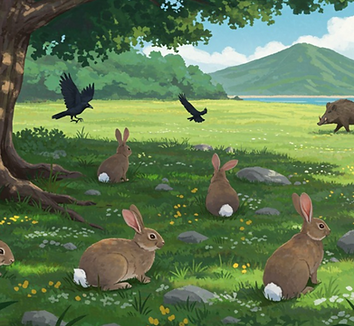
Can the Rabbits Not Be Rescued Simply Because They Inhabit Country-Owned Land?
During the trial concerning the mass slaughter of rabbits that took place a year ago, the official classification of the rabbits on Ohkunoshima Island was redefined—shifting from "invasive alien species" (their previous designation) to "protected animals."
It was precisely because of this new classification that the perpetrator could be prosecuted and ultimately found guilty.
However, recent discussions with the Ministry of the Environment have confirmed that—despite their status as "protected animals"—the fact remains that no individual or entity holds legal ownership over the rabbits. In other words, this implies that the Ministry of the Environment bears no responsibility for the lives of these animals. Frankly, I find it impossible to accept the logic that the Ministry—which is responsible for managing the national park where these rabbits reside—bears no responsibility for the very animals that serve as the park's primary tourist attraction, simply because it does not hold legal title to them.
I believe the fundamental issue regarding Ohkunoshima lies in the fact that a significant number of local residents profit from the island's rabbits. Although the Ministry of the Environment is a government agency, it is unlikely to take any actions that would hinder local development. This "local development" centers on a tourism industry built around the rabbits of Ohkunoshima as its main attraction—specifically, the revenue generated by tourists who, having visited the island, subsequently spend money in the neighboring city of Takehara. Consequently, local residents strongly desire the continued survival of the Ohkunoshima rabbits.
Without the rabbits, the stream of tourists visiting Ohkunoshima would likely dry up almost entirely. If tourists stopped coming, the city of Takehara would lose the revenue associated with its tourism sector. Given that there are few other attractions in Takehara city capable of drawing visitors, the region is, in essence, entirely beholden to the rabbits.
The fact that Ohkunoshima is designated as a national park also serves as an impediment to resolving this issue.
I have been aware for years of the Ministry of the Environment's stance—namely, that they do not wish for rabbits to inhabit the island. Consequently, the very act of establishing specific rules regarding feeding would appear to contradict the Ministry's underlying desire that visitors refrain from feeding the rabbits altogether. Indeed, were one to contact the Ministry today to inquire about feeding, the response would almost certainly be that they would prefer visitors not to feed the island's rabbits, if at all possible.
Above all, the Ministry lacks the authority to impose legally binding restrictions on tourists. I was informed that the signs posted around the island are not "Ministry of the Environment signs," but rather signs created by the "Ohkunoshima Future Creation Committee." These signs, I was told, serve strictly as "requests" and carry no authority for mandatory enforcement. Furthermore, it was fully acknowledged that there are inherent limitations to relying solely on signage and public awareness campaigns to curb undesirable behavior among tourists.
While Trap-Neuter-Return (TNR) appears to be the necessary approach for controlling the island's rabbit population, the Ministry did not express an outright negative view on this matter; rather, it appears there remains room for future discussion and consideration regarding this specific point.
Is it not morally wrong to indirectly condone the literal sacrifice of the rabbits on Ohkunoshima simply because doing so would result in a loss of revenue for the city of Takehara?
I find the explanation—that the current status quo cannot be altered because the island is a national park—wholly unconvincing, particularly when the sole justification for maintaining it seems to be the enjoyment of tourists.
While it is argued that private land would allow for various restrictions that are impossible within a national park, I strongly feel that such limitations are not immutable; surely, it would be entirely possible to modify definitions or establish exceptions if the will to do so existed.
If things remain as they are, absolutely nothing will change. We must raise our voices louder; otherwise, not only will the rabbits of Ohkunoshima continue to suffer a pitiful fate, but Japan—with its current lack of sensitivity toward animal welfare—will inevitably become a target of international condemnation.
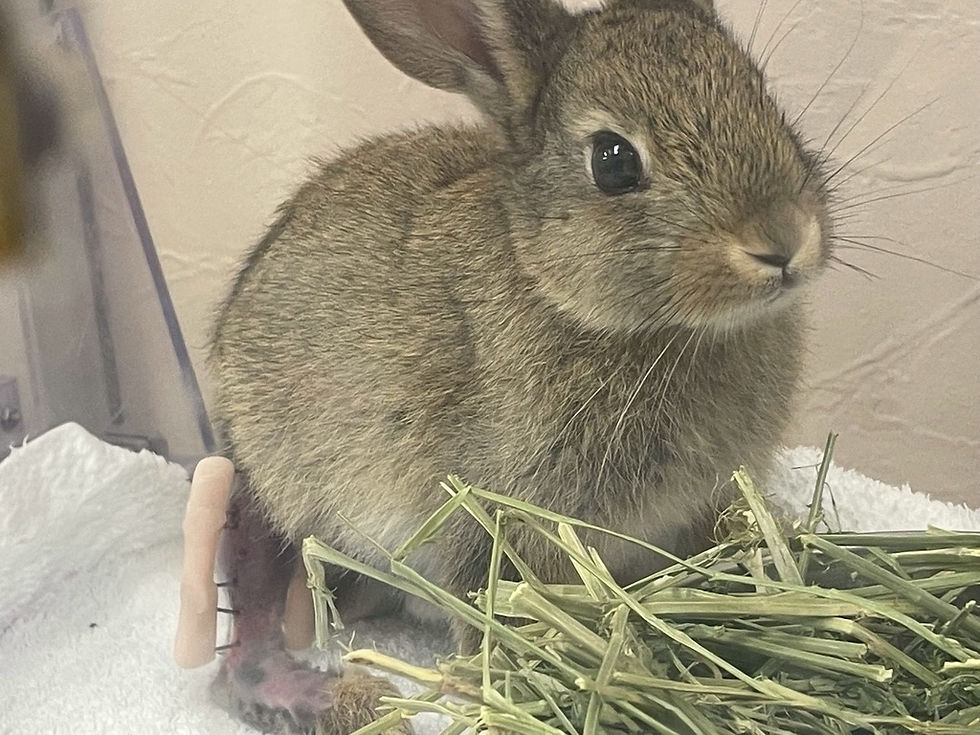
Regarding the rescueof sick or injured rabbits from the island, there has been no change in Ministry position since our last update (July 2024). As the Ministry of the Environment does not hold legal ownership of the rabbits, they are unable to legally prohibit their removal; consequently, we have informed them that our rescue group will continue to carry out necessary rescue operations moving forward.


Comments