

Rabbits who suffered from abscess
- junkoroberson
- Mar 14
- 3 min read


3/14/26
(Pictured: Rabbits on Okunoshima Island that have suffered from abscesses)
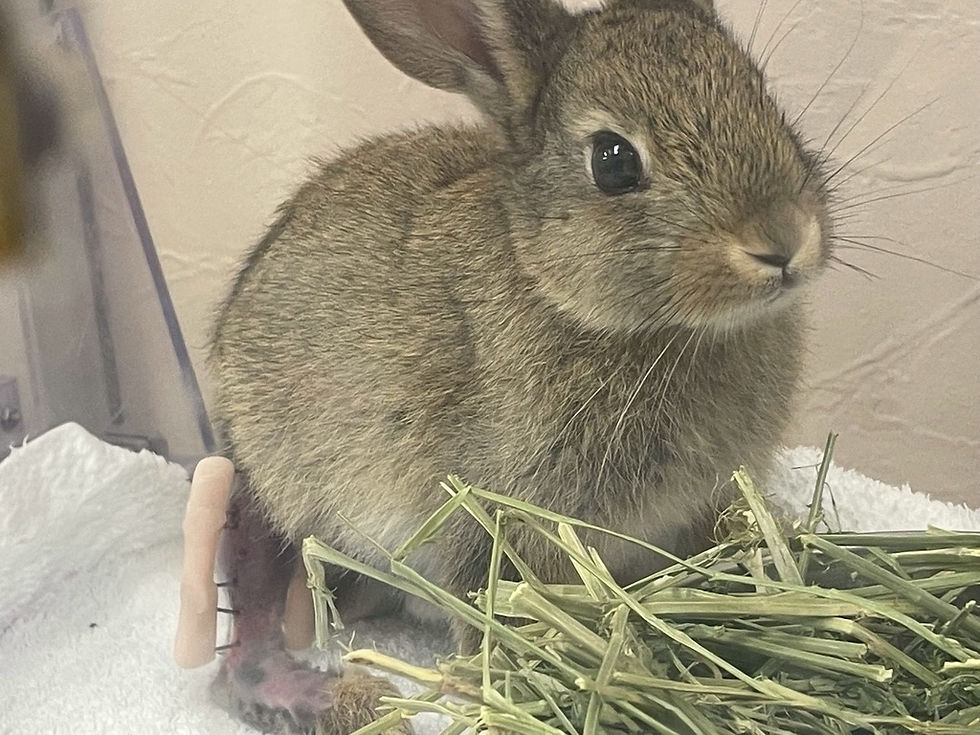
Saki—a rabbit rescued on February 18, 2026, with a massive abscess on her back—continues to bravely undergo treatment at the veterinary hospital today.Reflecting on Saki’s condition brings to mind the many other rabbits I have seen on Okunoshima Island over the years that were afflicted with abscesses. ( Unfortunately, Saki passed away despite her fight to survive)
According to veterinarians, rabbit abscesses are entirely different from those found in dogs and cats; they constitute a far more serious medical issue. The thick, cheesy, white pus characteristic of these abscesses rarely drains naturally, even if the tough outer membrane ruptures; consequently, thorough flushing and the administration of antibiotics are absolutely essential.
it is a troublesome condition that is difficult to cure completely, carries a high risk of recurrence, and can even metastasize to other parts of the body. I am told that the only definitive cure involves surgical removal of the entire abscess—including its encapsulating membrane—and that natural recovery is simply not possible.If left untreated, the bacteria will spread throughout the rabbit's entire system, eventually leading to death.
When rabbits—creatures with a strong territorial instinct—are allowed to roam freely in such a manner, it is inevitable that fights will break out frequently. This remains true even when there is an ample supply of food.In the case of the rabbits on Okunoshima Island, the vast majority of abscesses found on the body—excluding the face and throat—are likely the result of bite wounds sustained during these altercations.
Abscesses that form on the face or jaw, however, are typically caused by root infections resulting from dental malocclusion, or by bacterial infections such as Pasteurella. If left untreated, the infection can penetrate deep into the bone, leading to osteomyelitis.Now that I think about it, I have indeed seen many rabbits over the years with lumps beneath their jaws. At the time, it struck me as somewhat unnatural for an abscess to form in that specific location solely as a result of fighting. Many of the cases I once assumed were tumors may, in retrospect, have actually been abscesses—a condition I have evidently witnessed countless times. Given their often unbalanced diets, it is hardly surprising that the rabbits on Okunoshima Island frequently suffer from dental health issues.
Some people argue that fighting is simply a natural occurrence among rabbits living in the wild and that it is therefore unavoidable; however, I do not share that view. The very presence of rabbits on Okunoshima is, in itself, neither natural nor organic. They are simply abandoned animals that have bred.
Okunoshima, a designated national park, has become a tourist destination famous for its rabbits. Yet, within this tourist hotspot, the rabbits are left to fend for themselves without any care—subjected to conditions that amount to sheer neglect. There is not even a management system in place to provide medical attention should they fall ill or suffer injuries. They are treated merely as disposable props for tourism, left to die in vain.
Even for Japan—a country often considered lacking in awareness regarding animal welfare—should such a situation truly be tolerated?
If there is no intention to provide care, then a TNR (Trap-Neuter-Return) program—involving spaying and neutering—should be implemented immediately. I firmly believe that this vicious cycle must be broken.


Comments